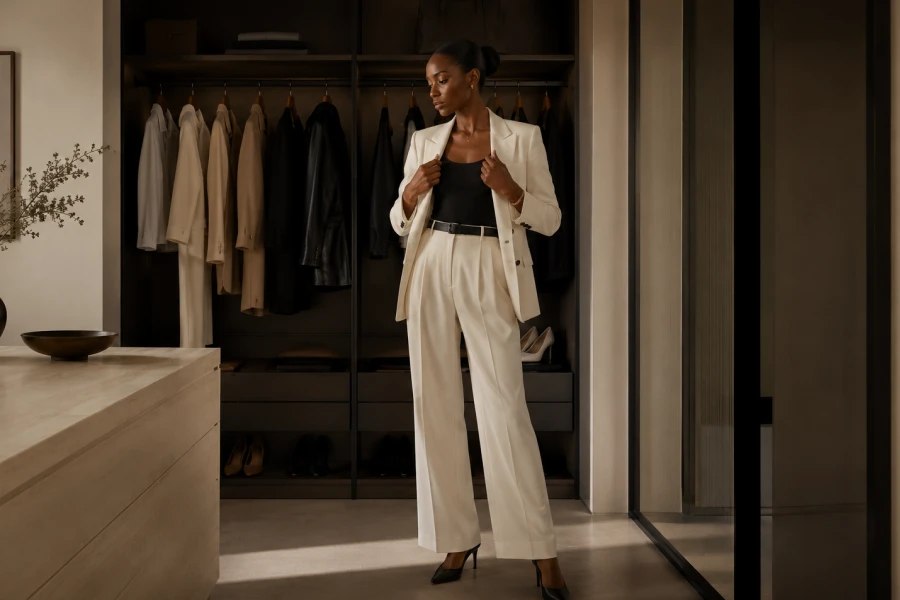
A minimalist closet system does not have to feel cold, empty, or overly strict. Many people imagine minimalism as a rail of identical neutral clothing. Real wardrobe minimalism is much more flexible. It means removing visual noise and keeping pieces that truly work. It also means building a closet that saves time without erasing personality. You can still love texture, color, accessories, and seasonal details. The system simply gives those choices structure. Instead of owning more, you own better. Instead of guessing, you repeat what works. Minimalism becomes personal when it supports your life.
Priorities keep minimalism from becoming random decluttering. Decide what you want your wardrobe to do. Maybe you want faster mornings. Maybe you want fewer impulse purchases. Maybe you want a cleaner visual style. Maybe you need clothes that travel well. Your goal shapes every decision. Without that goal, editing can feel emotional and confusing. A wardrobe editing method turns vague frustration into useful action. Priorities help you keep the right pieces. They also help you release the wrong ones.
Structure makes a smaller closet feel complete. Start with categories you actually wear. Include tops, bottoms, layers, shoes, and occasion pieces. Then check whether each category has enough range. You need pieces for weather, activity, and formality. You also need colors that combine easily. The closet should feel coordinated, not limited. A smarter closet organization approach supports this structure visually. When items are easy to see, outfits are easier to build. Order makes minimalism more practical.
Minimalism does not mean removing everything expressive. It means choosing expression deliberately. A signature jacket can stay. A favorite color can become an accent. Jewelry, shoes, scarves, and textures can carry personality. Prints can work if they support your palette. The goal is not to flatten your style. The goal is to reduce pieces that distract from it. Your closet should feel edited, not erased. Personal style often becomes clearer with fewer competing items. A smaller wardrobe can make favorite details stand out more.
Shopping changes when your closet has a clear system. You stop buying pieces because they are merely attractive. You ask whether they fit your colors, lifestyle, and formulas. You compare them with what you already own. You notice when something duplicates an existing item. You also notice when a piece fills a genuine gap. A mindful shopping habits mindset slows impulse spending. Fewer purchases can become more satisfying. The closet improves because every addition has a role.
Repeating outfits can feel sophisticated when the pieces are strong. A reliable formula removes stress. A consistent silhouette builds identity. A favorite color palette makes styling easier. Repetition also shows which pieces deserve investment. You may repeat trousers, shoes, jackets, or simple tops often. That pattern is information, not failure. Use it to refine your wardrobe. Style becomes easier when repetition is accepted. The goal is not constant novelty but dependable confidence.
A smaller closet should still support real variety. Rotate seasonal pieces when needed. Use accessories to change mood. Keep enough layers for weather shifts. Add one intentional accent when outfits feel flat. Remove only what truly does not serve you. Use a simplified style routine to make daily dressing smoother. Minimalism should reduce friction, not joy. When the system feels generous, you know it is working.



Leave a comment