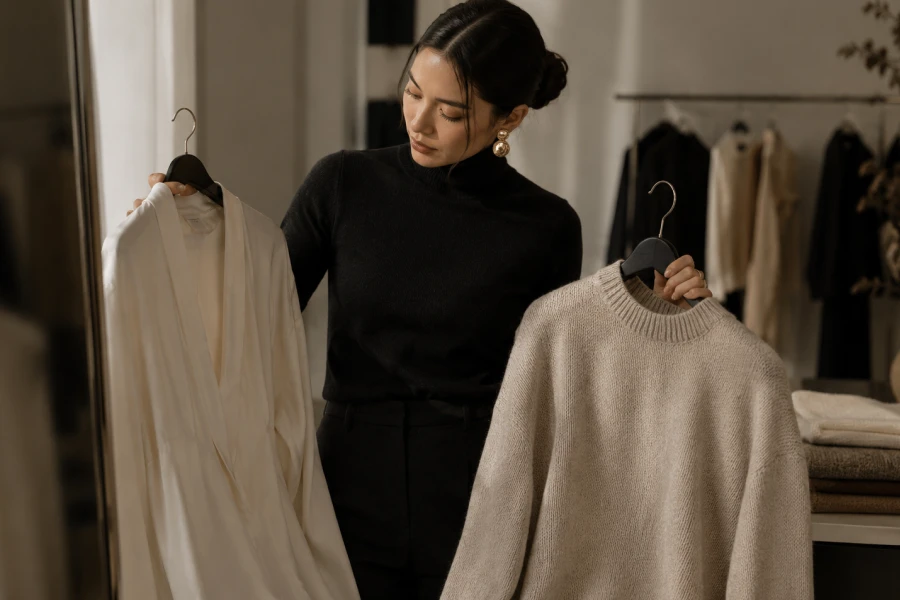
Clothing fabric choices explain why some outfits feel easy while others stay untouched. A garment can have the right color, size, and silhouette. It can still fail if the fabric does not match your needs. Texture, weight, breathability, and care requirements shape the wearing experience. These details influence whether you reach for a piece again. They also affect how long it remains useful. Better fabric thinking helps you shop beyond surface appeal. It makes your wardrobe more practical. It also makes personal style more comfortable. The best outfit begins before styling starts.
Fabric changes how clothing looks before anyone notices the label. Crisp cotton can look clean and casual. Silk can suggest softness and movement. Wool can add depth and structure. Polyester blends can look polished when designed well. Linen can communicate ease, texture, and summer comfort. Each material creates a visual message. Your style material confidence grows when you understand that message. You choose garments with clearer intention. Outfits feel more coherent because fabric supports the mood.
Feel determines wearability more than many shoppers admit. A scratchy sweater can ruin an otherwise beautiful look. A clingy dress can feel distracting all day. A breathable shirt can make a simple outfit feel luxurious. Fabric weight changes how clothing sits on the body. Stretch changes how freely you move. Texture changes how relaxed or formal something appears. These details influence confidence quietly. When fabric feels right, you stop adjusting yourself constantly. The outfit begins to support you instead.
Natural fibers come from plant or animal sources. Synthetic fibers are manufactured for specific performance qualities. Blended fabrics combine fibers to change feel, stretch, durability, or care. None of these categories is automatically superior. A natural fiber may breathe well but require careful washing. A synthetic fiber may resist wrinkles but feel warmer. A blend may offer a practical middle ground. Strong garment comfort planning helps you compare options fairly. Better choices come from use, not assumptions. Your closet benefits from informed variety.
Price alone cannot tell you whether clothing is worth buying. A cheaper garment can become expensive if it wears poorly. A higher-priced piece can feel valuable if worn often. Fabric plays a major role in that equation. Materials that suit your routine usually get more use. Pieces that require unrealistic care often sit unworn. Durable fabrics also help reduce replacement purchases. This is why fabric knowledge supports better budgeting. You can judge value more accurately. Cost per wear improves when material and lifestyle match.
A reliable closet usually includes a few trusted fabric categories. You may prefer cotton tees, wool knits, silk accents, or linen shirts. You may also rely on synthetic blends for stretch, travel, or active days. These preferences become personal style data. Notice which garments survive repeated wear. Notice which ones make you feel comfortable and polished. Notice which ones require too much effort. Over time, patterns become clear. Shopping becomes less emotional. Your wardrobe starts reflecting real habits instead of imagined versions of yourself.
Better fabric thinking naturally reduces wasteful shopping. You become less tempted by pieces that only photograph well. You begin noticing whether fabric supports your body, climate, and care routine. This makes each purchase more deliberate. It also helps you avoid duplicates that solve nothing. A sustainable wardrobe habits approach starts with choosing materials wisely. Clothes should feel useful, not merely new. When fabric decisions improve, outfit satisfaction rises. Your closet becomes smaller, stronger, and easier to trust.


Leave a comment