
How to build a capsule wardrobe becomes easier when you stop treating minimalism like punishment. A capsule is not about owning the fewest possible clothes. It is about owning the right clothes for your real life. Many closets feel full because they contain too many almost-right pieces. Some fit poorly, some feel outdated, and some belong to imaginary routines. A capsule helps you edit with purpose. It gives every item a reason to stay. It also makes getting dressed faster. The goal is clarity, not restriction. A better wardrobe begins with honest observation.
Your actual schedule should shape your capsule first. Count how often you work, travel, exercise, socialize, and relax. Notice what you wear repeatedly. Notice what stays untouched. A useful capsule supports daily patterns instead of fantasy scenarios. It should include clothing for your real climate and routines. It should also reflect your comfort needs. A capsule closet planning approach makes this process practical. You stop building for someone else’s lifestyle. Your wardrobe becomes personal, realistic, and easier to use.
The first edit should be honest, not dramatic. Remove pieces that do not fit. Set aside items that need repairs. Notice duplicates that serve the same purpose. Identify clothes you wear out of guilt. Keep pieces that feel comfortable, useful, and aligned. Do not force yourself to discard everything quickly. A strong capsule grows through reflection. Editing is not about losing options. It is about seeing which options already work.
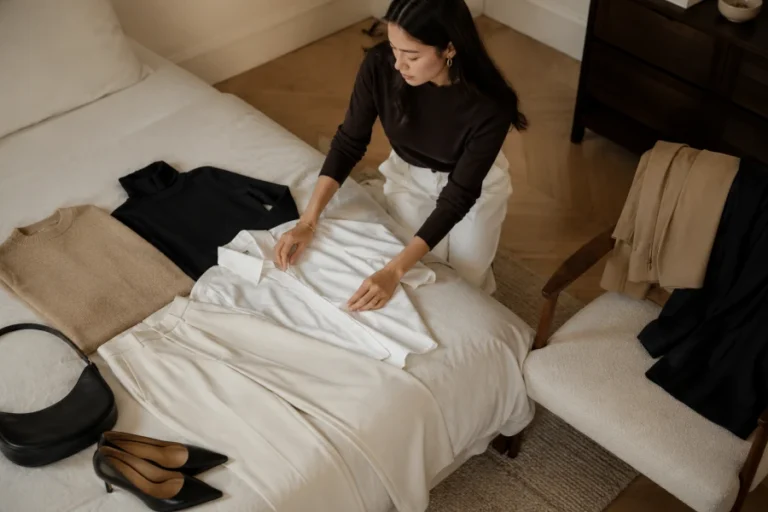
Anchor pieces are the foundation of a capsule. They may include trousers, denim, sweaters, shirts, dresses, jackets, and shoes. The right anchors depend on your daily life. They should mix easily with several other items. They should also feel comfortable enough for frequent wear. Color matters because coordination creates flexibility. Fit matters because repeated outfits expose problems quickly. A core neutral pieces strategy helps create range without clutter. Strong anchors reduce decision fatigue. They make outfits easier before accessories enter.
Outfit formulas make a capsule feel abundant. A blazer, tee, trouser, and loafer can become a reliable work formula. A knit, denim, and ankle boot can serve weekends. A dress, jacket, and simple shoe can handle casual dinners. These formulas reduce morning stress. They also reveal missing pieces more clearly. You begin shopping for gaps, not impulses. A versatile outfit formulas mindset turns fewer clothes into more outfits. Repetition becomes stylish rather than boring. Consistency gives your wardrobe identity.
Shopping too early can recreate the same clutter. Wait until the edit shows real gaps. You may need one better layering piece. You may need shoes that work across more outfits. You may need a dress that fits current plans. Write down gaps before browsing. Compare each potential purchase with existing pieces. Ask how many outfits it supports. Avoid buying for vague future occasions. Specific shopping protects your capsule. The best additions solve problems you have already identified.
A capsule should evolve as your life changes. Seasons shift, jobs change, bodies change, and preferences mature. Review your wardrobe regularly without starting over. Keep what works. Replace what wears out. Adjust colors and silhouettes when your style develops. Use intentional wardrobe building to guide each update. Flexibility keeps the capsule sustainable. You are not creating a museum. You are building a closet that continues to serve you.



Leave a comment